
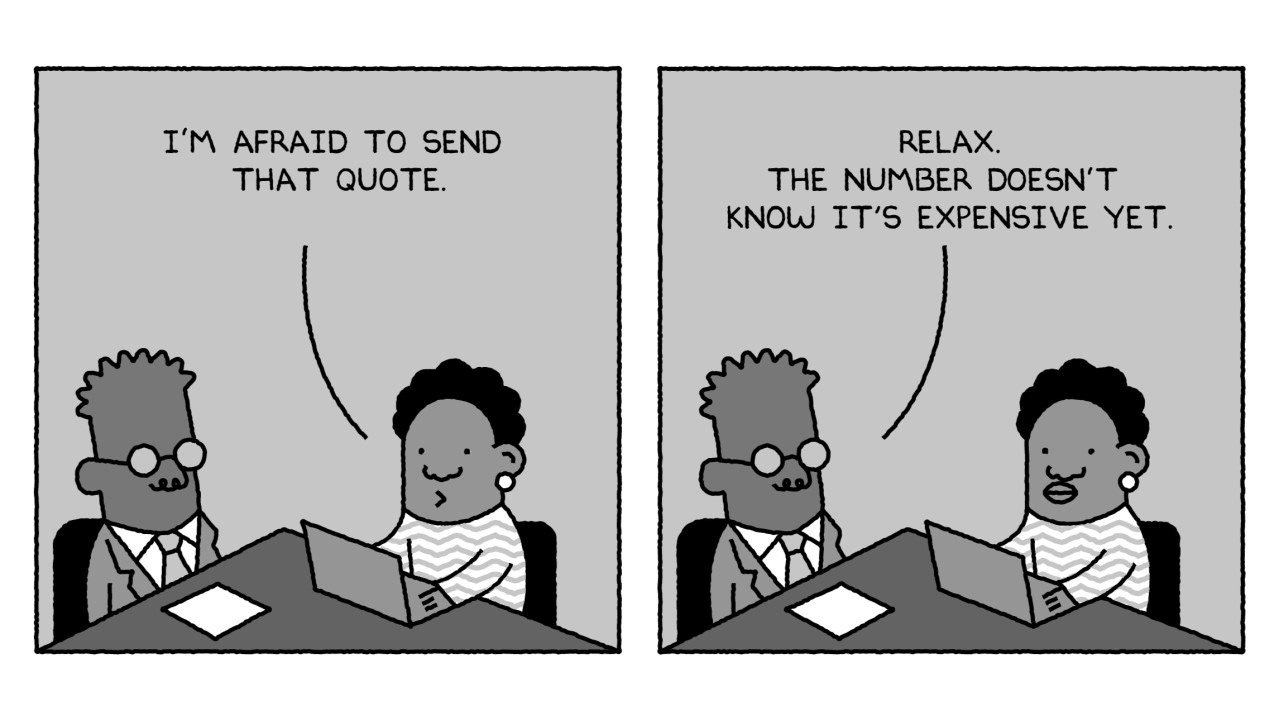
What an Illustrator Told Me About Pricing
Price isn’t really a solid thing.
An illustrator told me that the other day.
At first, it sounded strange. The kind of sentence that usually shows up right before someone explains why their invoice made a client nervous.
But then she told me about a meeting she had.
She was sitting with a client, going through a proposal on her laptop. Normal stuff. Scope, deliverables, timelines. Everyone nodding in that polite, professional way people do when they're trying to look like they understand creative work.
Eventually, they reached the price.
And, according to her, something slightly funny happened.
The number just sat there.
Not expensive. Not cheap.
Just… a number. Completely uninterested in the emotional drama happening around it.
She said what made it interesting was how quickly the room started doing the work the number refused to do.
Because a price only becomes “high” or “low” after it collides with context.
Things like:
Scope
Brand size
Audience reach
Usage rights
Timeline
Commercial impact
Remove those conditions, and the number becomes almost meaningless.
The same price for a global advertising campaign?
Suddenly, it looks modest.
The same price for a quick sketch for an internal emailer?
Now people start raising eyebrows.
But when we’re new to the game, we tend to treat price like it has a personality.
“This is expensive.” “This is cheap.” “This is way too much for me to say out loud.”
As if numbers wake up in the morning with moods.
They don’t.
Context gives them meaning.
Which is why lowering your price out of fear is such a strange move when you think about it. You're reacting to your nervous system, not the structure of the job.
Your brain is panicking.
The brief isn’t.
If a client’s budget shifts, adjust the scope. That’s normal business.
But quietly shrinking your price because you feel awkward saying it?
That’s your nervous system negotiating.
And the illustrator I spoke to said something I quite liked.
Her value didn’t suddenly become elastic.
The number just needed the right context to make sense.